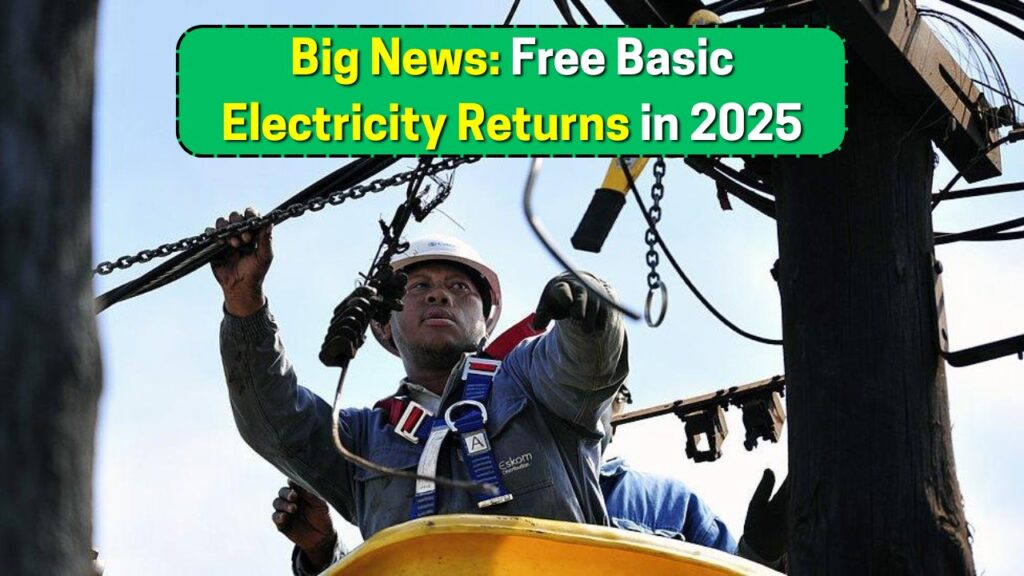
Free Basic Electricity in South Africa 2025: As South Africa looks towards 2025, the initiative of providing free basic electricity is gaining momentum, aiming to alleviate the financial burdens on low-income households. This vital scheme is pivotal in ensuring that even the most disadvantaged communities have access to essential energy resources. With the rising costs of living, this program is set to be a lifeline for many, providing much-needed relief to those who qualify. The initiative is part of a broader governmental strategy to enhance energy accessibility and affordability, ensuring that no South African household is left without power.
Understanding Free Basic Electricity in 2025
By 2025, the concept of free basic electricity in South Africa is expected to be a well-integrated part of the national energy strategy. This initiative primarily targets households identified as indigent, ensuring they receive a basic electricity supply each month without charge. The goal is to support communities in managing their household budgets more effectively by reducing their energy costs. While the specifics of eligibility can vary by municipality, the program generally targets those with low income or unemployment, aiming to provide 50 to 60 kWh of free electricity per month. This amount is intended to cover basic lighting, radio, and small appliance needs, contributing significantly to the quality of life for many households. The implementation of this program is not just about providing energy; it is also about fostering social equity and improving the living standards of marginalized communities across the nation.
Eligibility Criteria for Free Basic Electricity
Eligibility for free basic electricity in South Africa by 2025 will continue to be determined by specific criteria set forth by local municipalities. Typically, the qualifying requirements focus on identifying indigent households, which are defined by certain income thresholds and other socio-economic factors. Municipalities are tasked with conducting assessments to identify eligible households accurately. These assessments often include income verification, unemployment status, and the household’s overall financial situation. Additionally, the household’s electricity consumption patterns may be reviewed to ensure that the allocation of free electricity is both fair and beneficial. It’s important to note that while the criteria can vary slightly from one area to another, the overarching objective remains consistent: to support those in genuine need by offsetting their energy expenses, thereby contributing to economic relief and sustainable living.
How to Apply for Free Basic Electricity in South Africa
Applying for free basic electricity in South Africa involves a straightforward process, but it requires careful attention to detail to ensure all necessary documentation and information are submitted correctly. Interested households should first contact their local municipality to inquire about the specific application procedure, which might include filling out forms and providing proof of income and residency. Municipalities often require applicants to submit documentation such as ID copies, proof of income (or lack thereof), and utility bills to verify eligibility. Once submitted, the municipality will review the application to determine if the household qualifies for the benefit. It is advisable for applicants to follow up regularly with their municipality to check on the status of their application and to ensure that no additional information is required. By staying informed and proactive, eligible households can successfully take advantage of the free basic electricity program, easing their financial burdens and improving their quality of life.
The Impact of Free Basic Electricity on South African Households
The impact of free basic electricity on South African households is profound, offering significant economic and social benefits. For many low-income families, the cost of electricity can be a substantial part of their monthly expenses. By alleviating this burden, the free basic electricity program enables households to redirect their limited income toward other critical needs, such as food, education, and healthcare. This program not only helps in reducing poverty levels but also promotes equality by ensuring that all citizens have access to essential services. Furthermore, by providing a consistent and reliable energy source, the program supports the overall improvement of living conditions, contributing to better health and education outcomes. The initiative also plays a crucial role in empowering communities, as access to electricity can stimulate economic activities and development. As South Africa moves towards 2025, the continued commitment to free basic electricity underscores the importance of inclusive growth and sustainable development for all.